Every list of where visitors want to stay in Nashville names the same half mile. Front-porch bungalows two blocks off 12th Avenue South, walking distance to coffee, dinner, and Sevier Park, close enough to Belmont University and Vanderbilt University Medical Center that a short stay barely needs a rental car. On paper, it is the short-term rental neighborhood. Under Metro Nashville's own zoning code, it is one of the harder places in the city to legally start one from scratch.
That gap matters if you are comparing 12 South to other Nashville submarkets as a place to buy and operate a short-term rental, rather than just visit one. The neighborhood's Airbnb reputation was built under an older set of rules. The current rules do not extend the same welcome to a new owner, and the reason has nothing to do with demand.
The Permit Type That Decides Everything
Metro Nashville Codes issues two kinds of short-term rental permits, and the difference between them is the whole story here.
Metro's own permit-types page draws a hard line between where each type can be issued. New non-owner-occupied permits are only available as a use permitted with conditions in a defined list of commercial and mixed-use zones: districts like MUN, MUL, MUG, DTC (Downtown Code), CN, CL, and CS. They are explicitly not permitted in AR2A, R, RS, or RM zoned properties, which is Metro's shorthand for standard single-family and low-rise multifamily residential land.
12 South sits squarely in that residential category, the same classification that covers most of Nashville's historic in-town neighborhoods, and McSeveney Law has used 12 South by name as an example of a neighborhood where a buyer hoping to purchase purely for non-owner-occupied Airbnb use will very likely be turned down for a new permit.
Why the Zoning Line Falls Where It Does
The practical effect is a real dividing line between comparable-looking Nashville neighborhoods.
| Area | Typical zoning | New non-owner-occupied STR permit |
|---|---|---|
| 12 South | RS, R (single and two-family residential) | Not issued |
| Downtown and the DTC core | DTC (Downtown Code) | Issued as permitted with conditions |
| East Nashville residential blocks | RS, R (single and two-family residential) | Not issued |
A condo in the DTC zoning footprint downtown can, in principle, still pick up a new non-owner-occupied permit today. A bungalow in 12 South, no matter how well it photographs or how strong the historical nightly rate, generally cannot, if the buyer's plan is to hold it purely as an absentee rental.
The Reputation Is Inherited. The Permit Is Not.
Here is the detail that catches people who are new to this market off guard. Metro's operating rules state plainly that a short-term rental permit is not transferable or assignable to another person or address, and that a change in property ownership cancels the permit outright. Tennessee's Short-Term Rental Unit Act, passed in 2018, protects existing operators by grandfathering in the rules that were in place when they first got their permit, but only for as long as ownership does not change.
Put those two rules together and the picture is this: a 12 South property that has operated as a legal Airbnb for years, under permit rules that predate the current residential restriction, loses that status the moment it sells. The new owner does not inherit the old permit. They have to apply fresh, under today's rules, in a zoning district where new non-owner-occupied permits are not issued.
That means a listing marketed with strong historical Airbnb income in 12 South is, in most cases, selling you the furniture, the reviews, and the reputation of the neighborhood. It is not selling you the legal ability to keep doing what the previous owner did.
DADUs in 12 South
None of this locks investors out of 12 South entirely, but a new buyer will need to consider a different plan.
A rare grandfathered permit may continue only while ownership stays unchanged, so it is not a route for a new buyer.
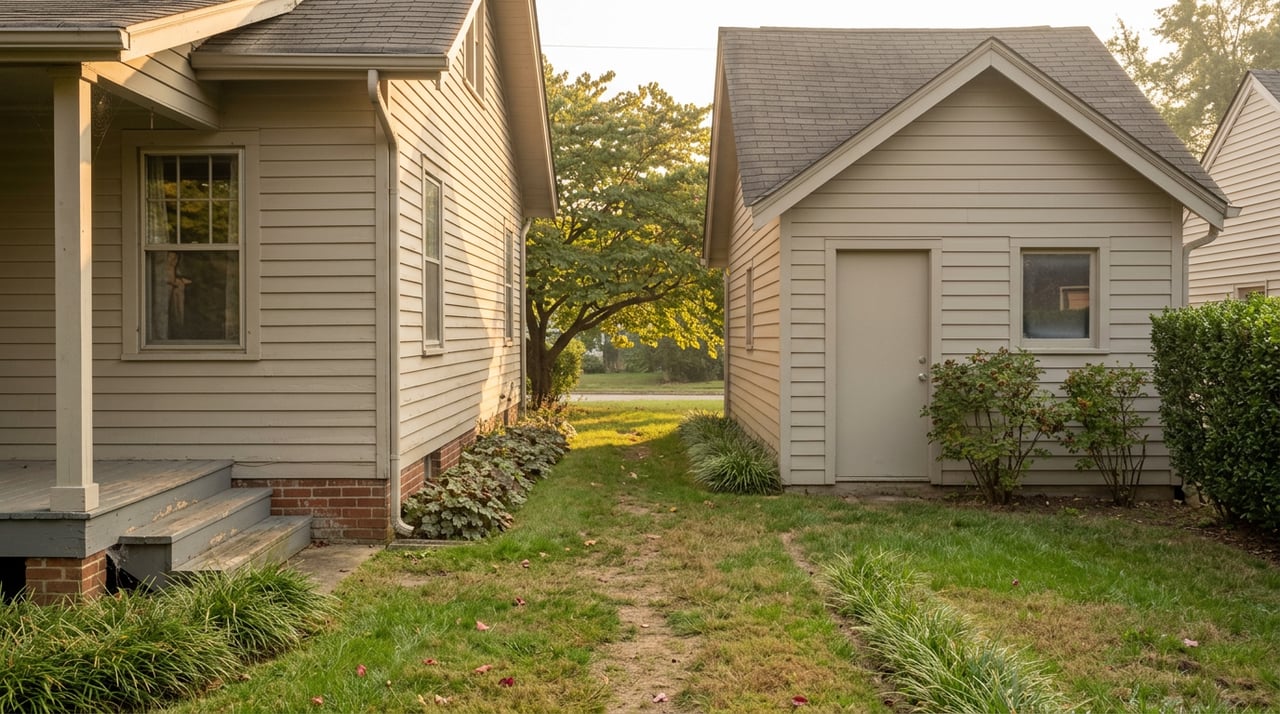
PropertyZoned says Metro allows DADUs up to 1,000 square feet on qualifying residential lots, and 12 South's small parcels, typically a tenth to a quarter of an acre, have made this a genuine local trend.
Price Data Show Two Very Different Markets in 12 South
The zoning question changes how you should read 12 South's headline price, because the price itself is doing double duty for two products that behave nothing alike.
As of July 31, 2026, there were 162 active listings in 12 South with an average listing price of $1,313,100 and an average of $478 per square foot, ranging from a $165,000 low to a $5,399,900 high. Single-family homes in the neighborhood have reportedly moved fast this year, with one source pointing to a median of just 12 days on market earlier in 2026 against a median sold price in the $1.19 million to $1.38 million range depending on the sample window.
Condos tell a slower story. As of late May 2026, condo listings in 12 South carried a median listing price of roughly $375,000, and the typical condo sat on the market for around 175 days, a striking contrast to the pace of the single-family stock a few blocks away.
That split matters directly to the zoning question above. A condo is the more realistic entry point for an out-of-state or first-time STR buyer, both on price and on maintenance. It is also, if it sits in RS or RM residential zoning like most of 12 South's condo stock, subject to the exact same non-owner-occupied restriction as the bungalows around it. The slower absorption on condos may partly reflect that the buyer pool for that product, investors hoping for turnkey rental income, is running into the same zoning wall as everyone else, while owner-occupant buyers move faster and pay up for the fast-selling single-family homes.
What This Means If You're Comparing Neighborhoods
If the plan is a hands-off short-term rental, the honest comparison is not 12 South against 12 South's own reputation. It is 12 South against neighborhoods whose zoning actually permits what you want to do. The Gulch and downtown's DTC-zoned buildings remain open to new non-owner-occupied permits. 12 South, along with most of the city's classic in-town residential blocks, is not.
Either way, price medians should not shape the decision. What matters is the zoning designation on the parcel and whether the seller's Airbnb history is something you can legally continue, or something that ends the day you close.
Frequently Asked Questions
If I buy a 12 South home that's currently an active Airbnb, can I keep renting it out the same way? Generally, no. Metro's rules cancel the existing permit when ownership changes, and 12 South's residential zoning means a new non-owner-occupied permit is very unlikely to be approved.
What happens to a grandfathered permit when the current owner eventually sells? Under the Tennessee Short-Term Rental Unit Act, grandfathered status holds only as long as ownership does not change. A sale ends that protection, and the new owner would need to apply under current rules, which do not allow new non-owner-occupied permits in 12 South's zoning.
Zoning maps and permit rules change the return on a property before any renovation budget or nightly rate ever does. If you are weighing 12 South against another Nashville neighborhood for a short-term rental purchase, or trying to figure out whether a specific listing's Airbnb history actually transfers to you, Tammi Weed can walk the zoning and permit picture with you parcel by parcel before you write an offer. Schedule a White-Glove Consultation to get a straight answer on what a given address will actually let you do.
This article is general information, not legal, tax or financial advice. Consult a qualified professional about your situation.