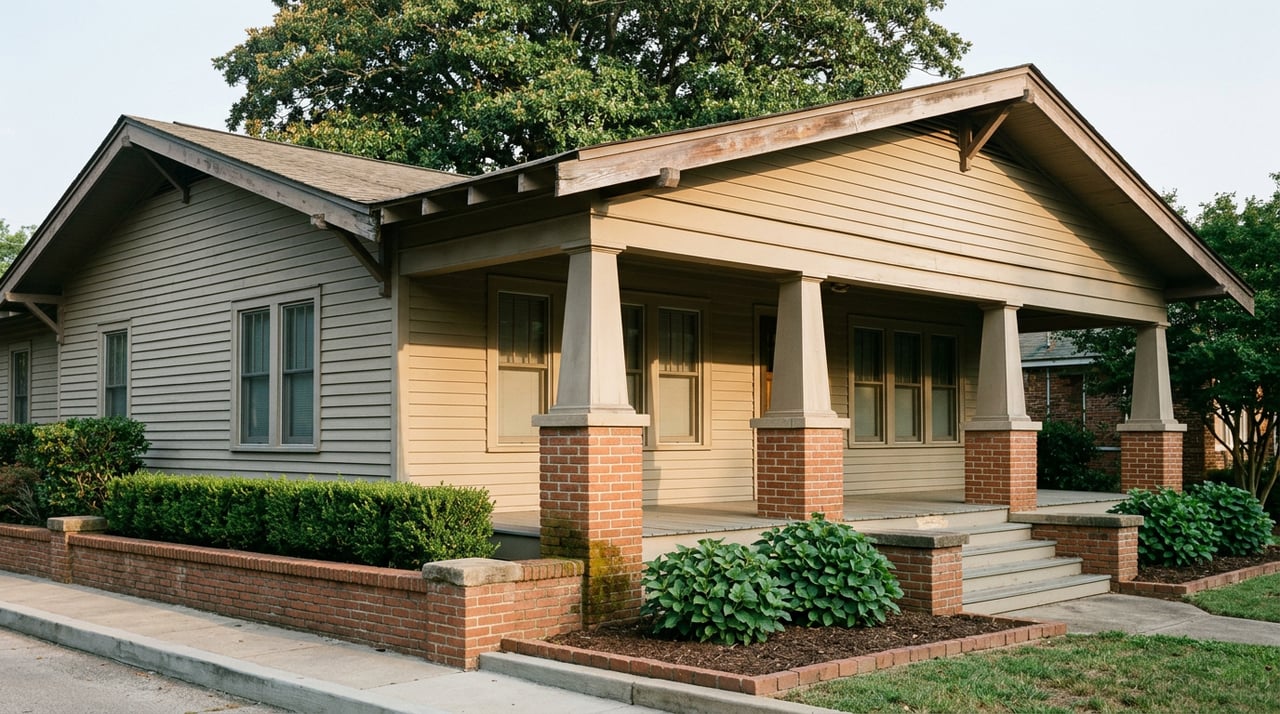
A homeowner near Sevier Park noticed his water pressure had dropped overnight. A wet spot showed up along a baseboard in his 1930s bungalow. When Parthenon Plumbing, the Nashville company that has worked on 12 South's older homes since 2008, traced the leak, they found a corroded galvanized fitting behind the bathroom wall, the kind of failure that shows up in houses of that era once the original pipe finally gives out. It was a same-day fix. It was also, unmistakably, the kind of problem that doesn't show up on a walkthrough, and doesn't show up on most standard home inspections either.
That's the part buyers in 12 South tend to miss. A general home inspection looks at what's visible: the roof, the panel, the crawl space, the fixtures. It does not put a camera ten feet underground to see what's happening in the sewer lateral running from the house to the street. In a neighborhood built largely before World War II, with mature oak trees lining almost every block, that's exactly where the next expensive surprise is most likely to be sitting.
The Inspection That Looks, and the One That Doesn't
Most Nashville home inspections run two to four hours and cover the structure you can walk through. A sewer scope is a separate service, typically $200 to $400, where an inspector feeds a waterproof camera through the main line to check for cracks, collapse, root intrusion, or improper slope. It is not automatically included in a standard inspection, and in a fast-moving market like 12 South, it's the add-on buyers most often skip to save time or money.
That's a real gap, because the two inspections are answering different questions. The general inspection tells you whether the house is sound today. The sewer scope tells you whether you're about to inherit a five-figure repair that has nothing to do with the house itself and everything to do with what's buried in the yard.
Why 12 South's Age Is the Actual Risk Factor
Homes in 12 South built before 1970 commonly used cast iron or clay pipe for their sewer laterals. Cast iron has a typical life expectancy of 40 to 60 years, and clay pipe is even more brittle, prone to cracking as the ground shifts with Nashville's freeze-thaw cycles and clay-heavy soil. Once a hairline crack forms, it becomes an invitation. Tree roots seeking moisture find the opening and grow into the pipe, and 12 South's leafy, mature canopy, the same trees that make the neighborhood's streets so walkable and shaded, is also the most reliable source of that kind of damage.
This is not a hypothetical. It is a documented, recurring finding in inspections across 12 South and comparable Nashville neighborhoods like Sylvan Park and East Nashville, where the housing stock shares the same age and the same tree cover. The pattern shows up often enough that local plumbers and inspectors treat a pre-1970 bungalow with a mature oak in the front yard as a property where a sewer scope isn't optional due diligence, it's the specific check that matches the specific risk.
What a Bad Scope Actually Costs
The reason this matters beyond curiosity is the spread between catching the problem early and catching it late. Here's roughly what each stage looks like in the Nashville market:
| Service | Typical Cost | What It Tells You |
|---|---|---|
| CCTV sewer scope | $200–$400 | Whether the lateral is intact, cracked, bellied, or root-blocked |
| Hydro jetting | $350–$800 | Clears grease or root buildup without replacing pipe |
| Trenchless CIPP lining | $4,000–$12,000 | Repairs cracks or partial collapse without digging up the yard |
| Full excavation replacement | $8,000–$20,000 | Required when the line has fully collapsed or shifted beyond lining |
A $300 scope that finds a hairline crack early can mean the difference between a $4,000 trenchless repair and a $15,000 excavation that tears up the same landscaping the buyer fell in love with. And in Tennessee, Nashville's dense permitting and utility coordination pushes these repair costs 10 to 15 percent above what the same job would run in a rural county, so the number at stake in 12 South specifically is not the low end of any national range you'd find in a generic guide.
The Waived-Contingency Trap
Here's where the math gets uncomfortable for buyers. In a competitive 12 South listing, waiving the inspection contingency is sometimes the price of a winning offer. That's a reasonable trade-off for cosmetic risk. It's a much riskier trade-off for a sewer lateral, because once you've closed, a collapsed line isn't a negotiation, it's a bill.
The workaround isn't to skip due diligence, it's to move it earlier. A buyer who wants to compete on a 12 South bungalow can request permission for a sewer scope during the showing period, before writing an offer, the same way some buyers pre-inspect a roof. It costs a few hundred dollars and either clears the biggest unknown or gives you a number to build into your offer instead of discovering it after the fact.
What the Permit History Actually Tells You
The other blind spot in an older 12 South property is what happened to it between its original construction and today. Century-old bungalows and row houses in this neighborhood have typically been renovated more than once, and not every renovation was permitted the way it should have been.
Metro Nashville keeps a public record of this. The Davidson County Property Permit History tool lets anyone search a specific address, pull up the Parcel Viewer, and see the permit history logged against that parcel, including whether trade permits for electrical, plumbing, or gas work were actually filed. It's a five-minute check that tells you whether a "recently renovated kitchen" was inspected and signed off, or done quietly without anyone from the Department of Codes and Building Safety ever seeing it.
It's worth knowing the ownership context too. Metro's rule is that an owner-occupant can self-permit renovation work on a single-family home, but if the property sits in an LLC or trust, a self-permit only covers work under $25,000. Anything above that, or any work pulled by an unlicensed hand, tends to leave a gap in the record that a buyer can spot before closing rather than after.
What This Means If You're Selling
For sellers, this cuts the other way and works in your favor if you get ahead of it. A clean sewer scope report, run before the home goes on the market, becomes a selling point rather than a defensive move. It answers the exact question a well-informed 12 South buyer is going to ask anyway, and it removes the biggest wildcard from the negotiation before it ever comes up. Most buyers would rather see a documented, working line than take your word for it, and most sellers would rather fix a known issue on their own timeline than lose a serious buyer over an unknown one discovered during their inspection window.
A Few Questions Worth Asking Before You Waive Anything
Does a sewer scope replace the general home inspection? No. They check different things. A general inspection covers the structure and systems inside the home. A sewer scope is a separate camera inspection of the underground lateral, and in a neighborhood with 12 South's age and tree cover, it's the one most likely to catch a five-figure problem the general inspection can't see.
If a scope finds a problem, what are the options? It depends on severity. Root intrusion at a single joint might only need hydro-jet cleaning and a maintenance plan. A collapsed section or failing pipe usually calls for either trenchless lining or full replacement, and the scope report becomes the basis for negotiating a credit or repair before closing rather than after.
Buying or selling a bungalow in 12 South means working with a piece of infrastructure that's often older than the roof over it. Knowing which inspection actually answers which question, and pulling the permit record before you write or accept an offer, is the difference between a smooth closing and a repair bill that shows up the week after you move in.
If you're weighing a purchase or a listing in 12 South and want a second set of eyes on what the inspection and permit history actually say about a specific address, The Tammi Weed Team offers a White-Glove Consultation built around exactly this kind of due diligence. Schedule a conversation before you write the offer, not after.
This article is general information, not legal, tax or financial advice. Consult a qualified professional about your situation.